

The October Edit: Six Objects for the Longer Evening
I don't build an edit by season alone.
I build it by asking what a home actually needs when the light changes. Not what looks autumnal. Not what photographs well against a dark background. What earns its place in the hours between five and ten in the evening, when October makes the inside of a home feel like the whole world for a while.
This month, six pieces made it through. Here is how that happened.
THE QUESTIONS I ASKED FIRST
Before any product is considered for a Narrated Home edit, it passes three tests. I have applied them consistently across every season. This October was no different.
The first: does it change something? Not fill a space — change it. An object that occupies a surface without altering the quality of that surface is not earning its place. In October, when the evenings close in and the home becomes the whole setting, this question matters more than at any other time of year. I want objects that make a room feel different after dark. Different, and better.
The second: does it have staying power? Not trend-staying power — the kind that belongs to a moment and fades with it. I mean the kind that means an object will look right in five years and ten, that is made of a material worth living with rather than looking at once. Objects that belong to a season are the opposite of what this edit exists to offer.
The third: does it serve a real moment? The Narrated Home edit is not decorating advice. It is a selection of objects for a specific way of living — the considered evening, the quiet hour, the room that has been arranged for something rather than simply occupied. Every piece here belongs to that moment. Not abstractly. Specifically.
These were the questions I asked of everything I considered this autumn. Six pieces answered them.
THE EVENING RITUAL
The first three pieces belong to a specific kind of hour. Not every evening — the intentional one. The one where the day ends on your terms rather than simply stopping. Pour something. Light something. Change the register of the room before dinner, or before the film, or before nothing in particular.
This is not a lifestyle aspiration. It is a very small act that changes the quality of an evening. These three objects are the tools for it.

Whiskey Chilling Stones Gift Set — £80
This is a category that has been cheapened by novelty, which is the first thing I want to address. Most whiskey stone sets are sold as gifts for people who are difficult to buy for. The stones are synthetic, the presentation is an afterthought, and the whole thing communicates nothing about the drink or the person who drinks it.
These are not those.
Hand-cut from natural granite — which chills without the thermal shock that dilutes — they lower the temperature of a spirit without changing what it is. The set arrives weighted and contained: six stones, a granite ashtray, a precision cigar cutter. The presentation is deliberate. Everything here has been chosen to support the same ritual, not assembled from separate things.
What convinced me is what happens when someone sees them on a drinks tray and asks about them. That is not a small thing. It means the object is communicating something worth communicating. I chose this because it earns its place in the room before anyone has poured anything.

Flask Decanter — £90
The line between a vessel and an object is the shape.
Most decanters announce themselves. They sit on a surface and their function is the first thing you see. This one does not work that way. The flask form is familiar enough to read immediately and unusual enough to hold attention. It simply exists on a surface — a sideboard, a kitchen counter, a small table that has no other purpose than to hold beautiful things — and whatever is poured into it becomes part of how the room looks.
It is mouth-blown in Poland by artisans who have been working glass for generations. The neck is hand-painted with platinum. The stopper is ground by hand to fit only this vessel. None of this is visible at a glance. It is the kind of quality that reveals itself slowly, which is exactly the right quality for an object you intend to live with rather than show off.
I have had mine out all year. In October it has whisky in it. Neither arrangement requires explanation.
Made to be kept, not replaced.

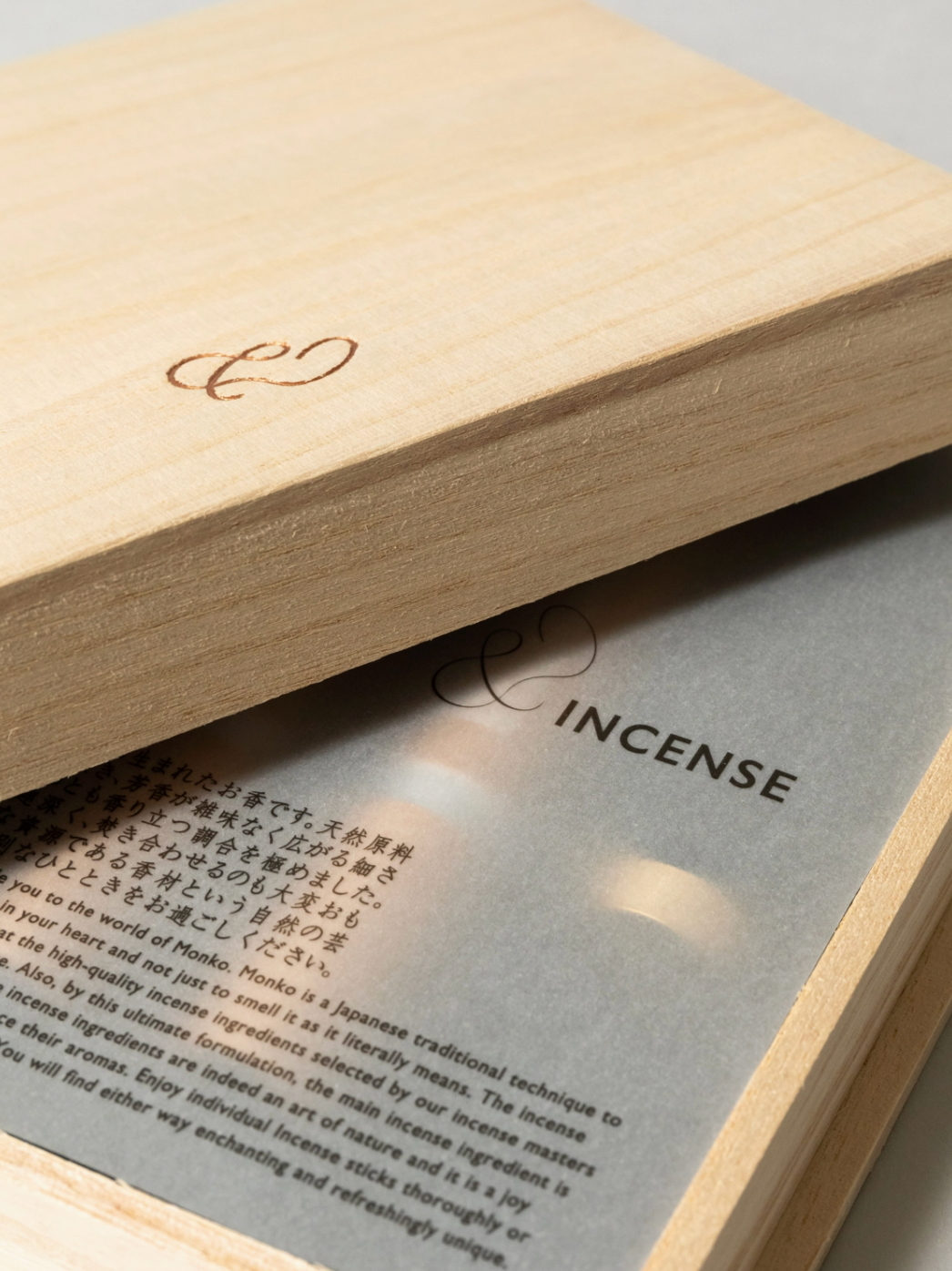
& So. Luxury Incense — £110
I found this and have not stopped thinking about it. Not because of what it is — incense is common enough — but because of what it does when lit in a room that has already been arranged for the evening.
It doesn't perfume the space. It changes it.
Handcrafted on Awaji Island, Japan — the origin of some of the world's finest incense, where production is a matter of regional pride and generational knowledge — this set contains three scents: agarwood, sandalwood, clove. Each arrives in kraft paper tubes with a solid brass holder and a minimalist wooden box that earns its place on any surface it occupies. The brass will develop a patina over time. The box improves with handling. These are objects that age into themselves.
The scent is quiet and complex. It doesn't fill the room with something — it shifts what the room already is. Light it at the same time every evening for a week, and notice what happens to that hour. Something settles. The evening becomes its own thing rather than just the end of the day.
This is the piece in this edit that does the most work for the least gesture.
THE HOME IN AUTUMN
The second group is quieter. These are not objects for a ritual — they are objects for a room. The things you place and then stop noticing, except that the space feels different, and better, and you know it is because of them.
This is harder to achieve than it sounds. Most decorative objects ask something of a room — ask it to accommodate them, or explain them, or provide a context they haven't earned. The three pieces below ask nothing. They simply belong.

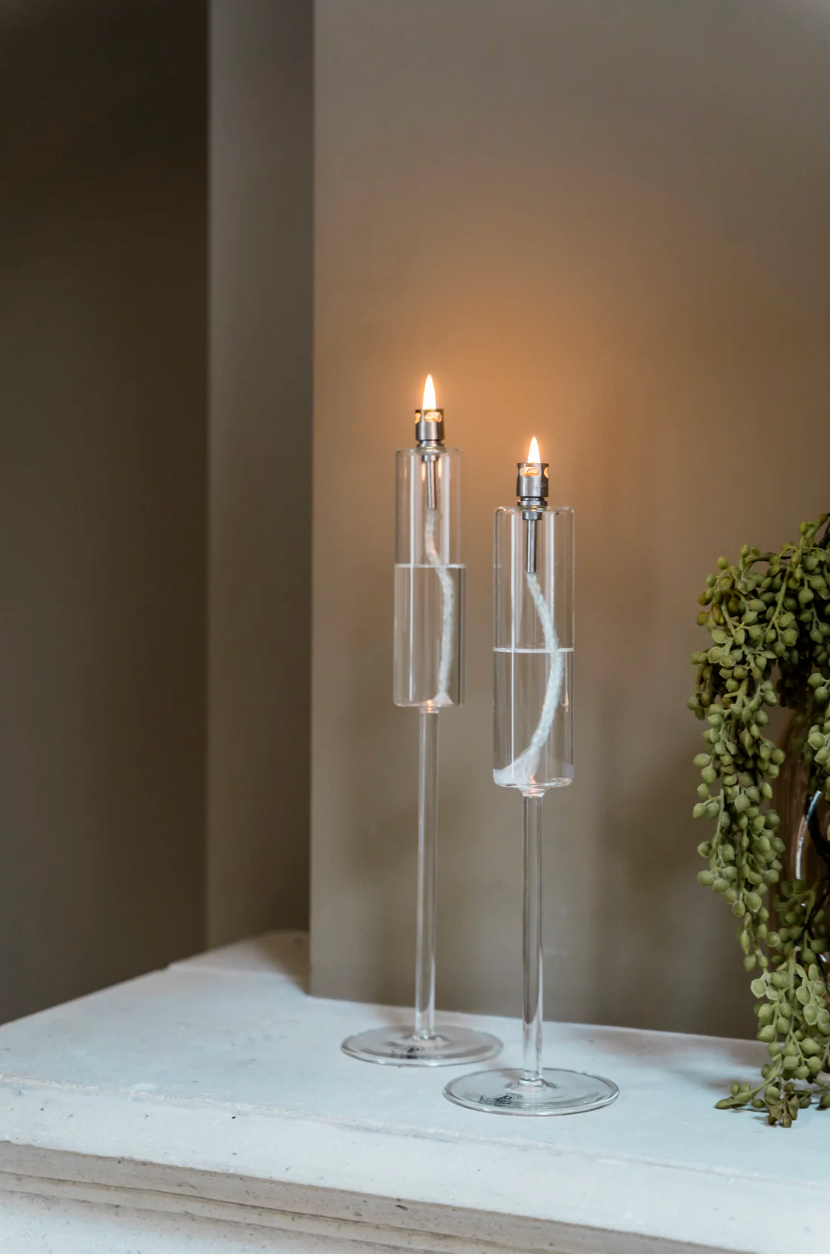
Candlestick Oil Lamp — £45
Electricity has solved so many problems and ruined so many others. The quality of light in an evening room is one of them.
A bulb gives you brightness. An oil lamp gives you something a bulb cannot: a flame that responds to the room, that moves with the draught from an opened door, that makes the wall behind it soft. You cannot replicate this with a dimmer switch. The softness is not a level of brightness — it is a quality of light that only a flame produces.
This one is spare and considered in form: handcrafted clear glass, chrome burner, no soot, no smoke, up to 23 hours on a single fill. It is designed to work as a candlestick but function as an oil lamp, which means it sits correctly on a dining table or a shelf without looking like equipment. It looks like it belongs. At £45, it is the least expensive thing in this edit and possibly the most immediately transformative.

Marble Chain Link — £40
This one almost didn't make it — not because it failed the tests, but because I spent more time with it than usual before I understood what it was doing.
A chain link in marble is a familiar geometry made in an unfamiliar material, and the combination does something unexpected: it makes you look twice at both. The form is industrial and ancient at once. The marble is cool and weighted in a way the form doesn't prepare you for. You pick it up and the material surprises you, and that surprise is the point.
I place it on a coffee table, among books and the occasional empty glass. It introduces a geometry that pulls the eye without demanding it. It is not decorative in the way that requires explanation. It is interesting to look at and interesting to handle, and sometimes that is genuinely enough.

Sunshine Throw — £155
The last piece is the one you will use most. Every day, if October behaves as it usually does.
A throw on a sofa is a statement about how you intend to spend the evening. It communicates something about the room and something about the person in it. This one communicates both well. The weight of it is the point — 1.65 kg, 170 × 200 cm, substantial enough to mean something and light enough to keep pulling over yourself rather than folding it away and retrieving a blanket instead.
Ochre on one side, blue-olive on the reverse. The colour sits between ochre and straw and has the particular quality of looking warmer than it is, which is exactly right for October and the months that follow it. The carry strap with antique brass hardware is there if it ever leaves the sofa. It probably won't.
I have it on the reading sofa and it has not moved. That is the test I apply to everything in the end: is it still there? This one is.
These six pieces are the October edit. Not a collection in the fashion sense — there is no theme being forced, no mood board being illustrated. Just objects that belong to a specific shift in the season, chosen because they pass the tests and change the room in the way October asks for.
The evenings are longer now. Make something of them.
Tanya Natasha - Founder


Comments