

'The NH Spring Edit: What We Chose and Why'
I don't build an edit by asking what will sell.
I build it by asking what belongs. What has earned its place in a considered home at this particular moment of the year. What has a story worth telling and a material worth living with. Those are different questions, and they lead to different objects.
This spring, three pieces made it through. Here is how that happened.
The criteria, before the products
Every piece considered for a Narrated Home edit passes three tests before it earns its place.
The first: does it have a story? Not a marketing story — a real one. A maker, a material, a place of origin that means something. An object without provenance is just an object. With it, it becomes something a person can own with intention.
The second: does it earn its place in a room? Not fill a space — earn it. There's a difference. Filling is easy. Earning requires the object to do something: hold light, create tension with what's beside it, change the quality of a surface. If I can imagine a room without it and feel nothing, it doesn't belong in this edit.
The third: is it made to last? Not physically only — though that matters — but aesthetically. Will it look right in five years? Ten? Objects that belong to a moment rather than a life are the opposite of what Narrated Home exists to offer.
These are the questions I asked of everything I considered this spring.
The Pale Wood Chain Link
This piece almost didn't make it — not because it failed the tests, but because I wasn't sure I understood it immediately.
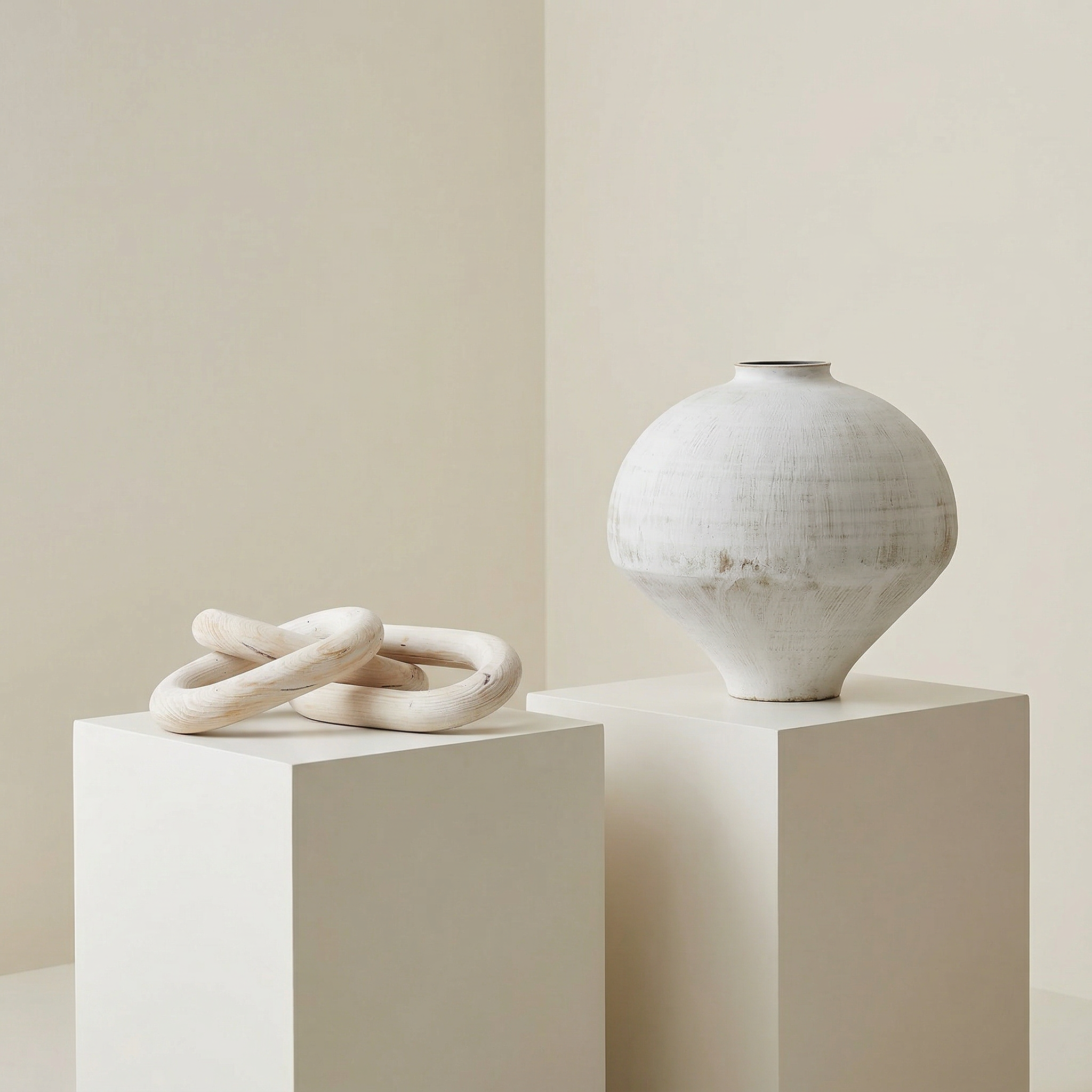
The Pale Wood Chain Link is handcrafted in Honduras from natural pine, each link individually shaped and hand-whitewashed. When I first handled it, I wasn't certain. It felt like it could go either way — sculptural statement or decorative novelty. Those are very different things, and I've learned to sit with that uncertainty rather than resolve it too quickly.
What convinced me was the grain. The whitewash doesn't hide the pine — it reveals it. Every natural marking in the wood comes through the finish. Each piece will look slightly different from the last, and that variation is not a flaw, it is the point. An object that bears the evidence of its material is an honest object. Narrated Home is built on honest objects.
It also behaves unexpectedly well in spring light. The pale finish sits quietly in the morning and deepens in the evening. Place it coiled at the base of a taller piece on a shelf, or draped across a stack of books. It asks nothing of the room. It simply belongs.

The Wabi Sabi Large Vase
This one passed all three tests without hesitation.
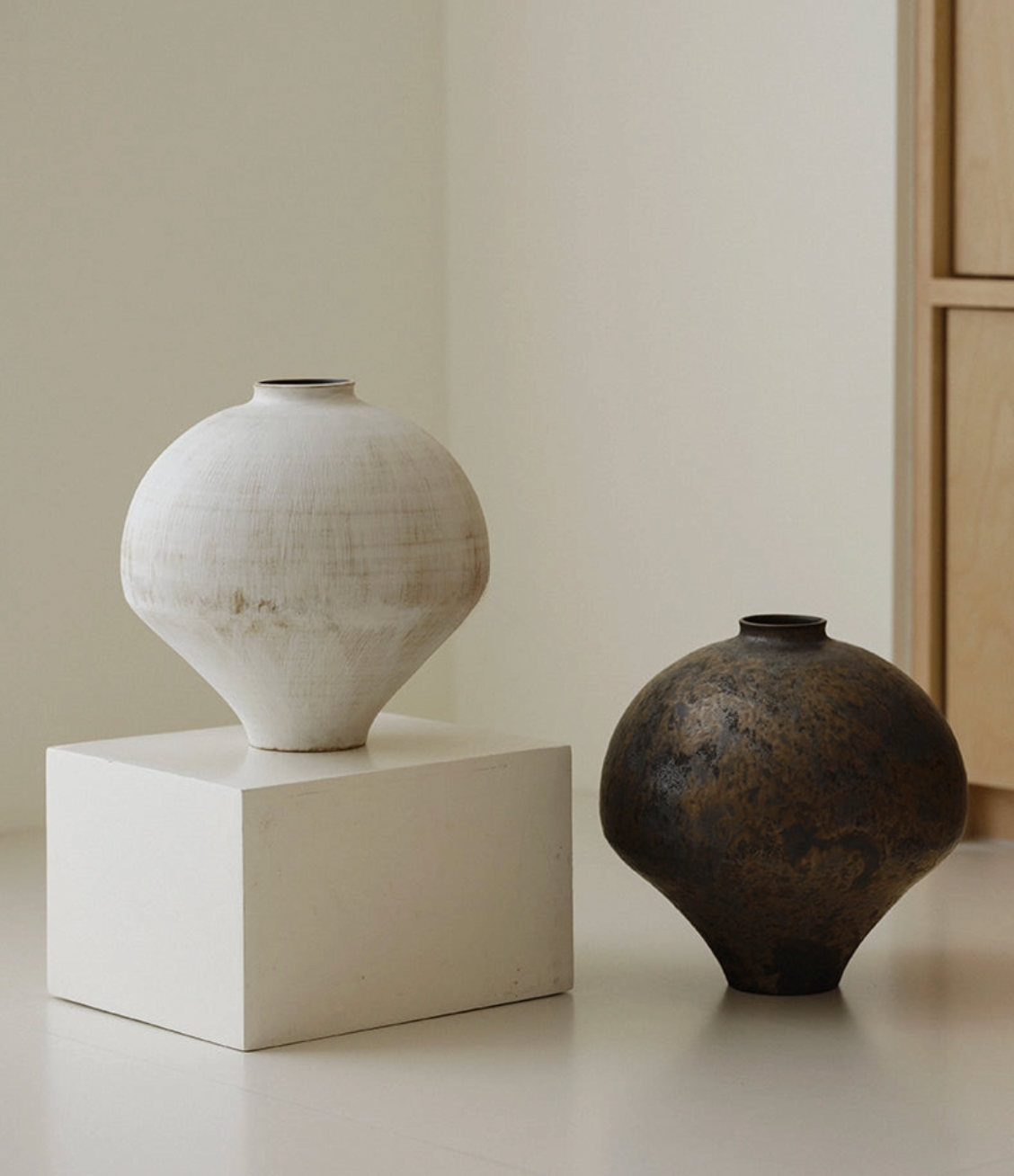
The Wabi Sabi Large Vase is handmade ceramic — each piece shaped individually, which means each piece is unrepeatable. The surface carries tonal shifts from pale white to warm earth, the marks of the making process visible if you look closely. Its scale is deliberate: this is not a shelf piece. It is a floor piece, a table anchor, a presence rather than an accent.
What I keep returning to is its quality of stillness. There are objects that demand your attention and objects that simply occupy space well. This vase does the latter — and that is considerably harder to achieve. In spring, when the temptation is to brighten and add, something that holds its ground quietly is exactly what a room needs.
I chose the wabi-sabi philosophy not as an aesthetic reference but as a value one. The Japanese concept of finding beauty in imperfection and impermanence is not decorative thinking — it is a way of seeing. It aligns with what Narrated Home believes about the objects worth owning. Nothing here is perfect. Everything here is considered.

The Marrakech crystal
This is the piece I'm most looking forward to telling you about properly.
The crystal collection arriving from Marrakech was sourced from a family workshop in the medina — three generations of artisans who select, cut, and finish raw mineral specimens by hand. No two pieces are the same shape, the same weight, or the same interior formation. That is not a limitation of the collection. It is the collection.
This particular specimen is raw quartz with a rust-iron exterior casing — the colour of the Moroccan earth it came from. The interior cluster is translucent, almost white, and refractive in a way that changes through the day. I brought it back from the medina and placed it on a south-facing windowsill. I have not moved it since.
It passes all three tests with something to spare. The story is three generations deep. It earns its place in a way that is literally optical — it does something with light that no ceramic or wood object can do. And it will look exactly right in this home or any considered one in ten, twenty, thirty years. This is the introduction.

What didn't make it
There was a fourth piece I considered seriously for this edit. A ceramic object — beautifully proportioned, well made, from a reputable source. It passed the first two tests. The story was there. It earned its place in a room.
It failed the third.
The glaze finish was trend-adjacent in a way I couldn't resolve. The colour sat in a palette that felt very specific to this particular moment in interior design — the kind of warm terracotta that has been everywhere for two years and will look dated in two more. The object itself was not the problem. The timing of it was.
I want every piece in a Narrated Home edit to be something a customer is still glad they chose a decade from now. That is a high bar. It should be.
Every piece in this edit cleared it. Nothing here was chosen because it was convenient, or because it photographed well, or because it filled a gap. Each one was chosen because nothing else would do.

Kommentare